OUR MATERIALS

Delicate Materials

Delicate Materials

Selected watch straps and components are made from materials with distinctive character – including leather, rubber, and textiles. They offer exceptional comfort and aesthetic appeal but are more sensitive to external influences than metal.

  • Avoid contact with moisture, perspiration, and prolonged heat.
  • Protect the materials from perfume, cosmetics, and chemical substances.
  • Be mindful of friction with rough surfaces and color-transferring textiles.
  • Clean surfaces only with a soft, dry, or slightly damp cloth.
  • Careful handling significantly contributes to preserving the structure and appearance of the watch over the long term
    Leather straps

    Leather straps

    Union Glashütte primarily uses calfskin leather – smooth or crocodile-embossed – as well as cowhide, horsehide, and goatskin for its watch straps. As natural materials, they give each watch an individual character and develop a distinctive patina over time.

  • Protect from water, high humidity, and intense sunlight.
  • Do not wear while showering, swimming, or playing sports.
  • Avoid contact with strongly colored materials (e.g., denim).
  • Dry gently after exposure to moisture – without heat.

  • Slight variations in color and surface are typical of the material and emphasize its individual character. Depending on use, the material will change over time – therefore, replacing the strap is a natural part of long-term use.
    STAINLESS STEEL

    STAINLESS STEEL

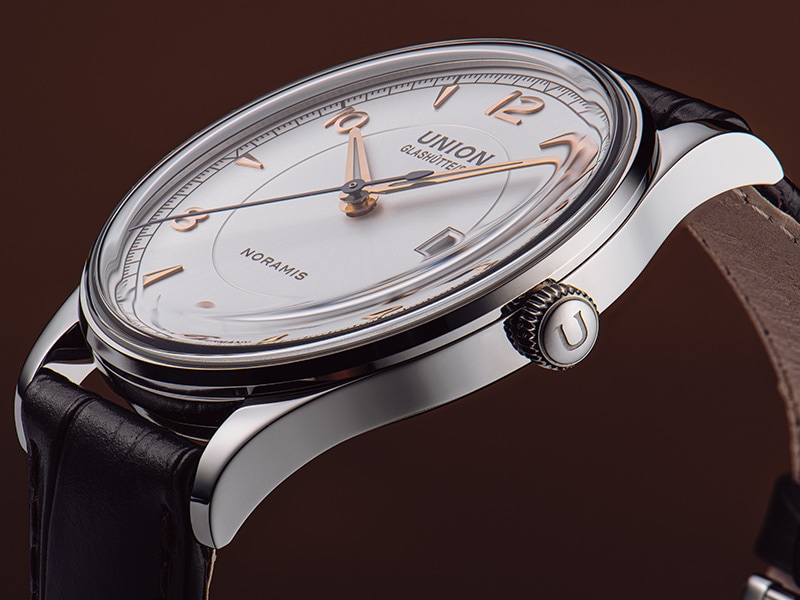
    Union Glashütte uses only 316L stainless steel for its cases, bracelets, and clasps. This alloy is characterized by high corrosion resistance, skin compatibility, and durability, providing a reliable foundation for everyday use. At the same time, finely machined and polished surfaces contribute to the watch's distinctive appearance.

    While stainless steel remains durable in use, it can—especially polished surfaces—acquire minor marks. To preserve the surface for as long as possible, it is recommended to avoid contact with hard or abrasive materials and to store the watch separately from other objects. After exposure to salt water or chlorine, it should be rinsed with clean water and dried with a soft cloth.

    Regular cleaning with a microfiber cloth is sufficient for maintenance; a slightly damp cloth can be used if necessary. Avoid aggressive cleaning agents or abrasive materials. The finest signs of wear can be reduced through professional servicing, thus preserving the original finish for years to come.

    Gold

    Gold

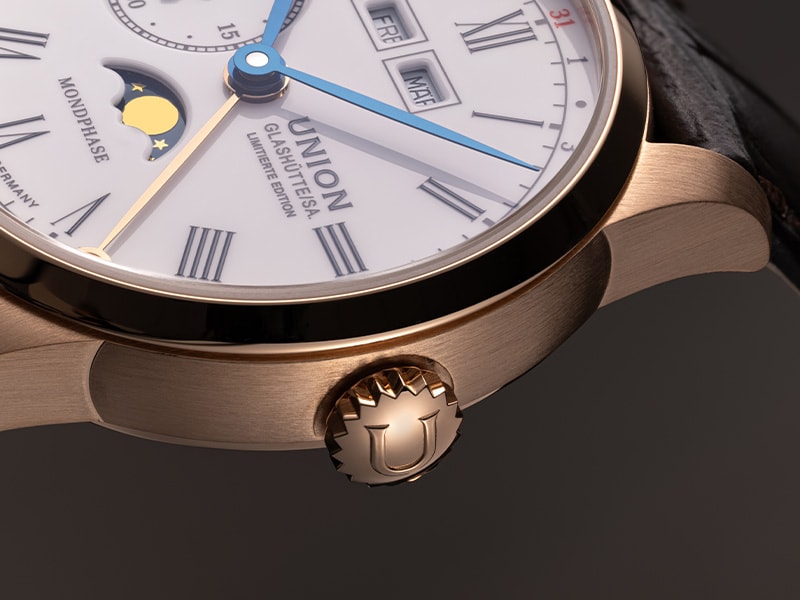
    Refined gold is very soft and is the most ductile of all metals. Soft, refined gold is a material that is ill-suited for use in jewellery, watches, coins, etc., and is therefore alloyed with other metals to alter its hardness, strength and colour, as well as to improve polishing results and bring down the price. For its cases, crowns and buckles, Union Glashütte only uses gold alloys with a copper content and with 750 parts per thousand of pure gold (18 carat). This produces a rose gold tone.
    Saphir

    Saphir

    The sapphire used by Union Glashütte for its crystals is a white, synthetic sapphire. Thanks to its hardness rating of 9, this crystal can only be scratched by very hard diamond-like substances. Union Glashütte watches only use double-sided anti-reflective sapphire crystals. As there are no reflections on the crystal, the full splendour of the dial is revealed.
    Satin

    Satin

    Some ladies' watches have a synthetic satin strap, which is far more durable than a natural satin strap.
    Water resistance

    Water resistance

    All Union Glashütte watches are water-resistant as follows: Men's watches up to 10 bar (100 m) Ladies' watches up to 5 bar (50 m) Gold watches up to 3 bar (30 m). The water resistance cannot be guaranteed indefinitely. It may become compromised by ageing of the seals or knocks to the crown or push-buttons. We therefore recommend that you have the water resistance of your watch checked once a year by an approved Union Glashütte Service Centre and, if required, that you replace any defective parts. Do not open the watch yourself under any circumstances.
    Carbon

    Carbon

    Carbon fibre is an innovative, high-tech material, which is often used in aerospace engineering. On some models, Union Glashütte finishes the bezels with carbon fibre. To be precise, these fibres have been industrially produced from raw materials that contain carbon; these are then processed into fibre-reinforced plastics. Apart from the unmistakeable 3D structure of carbon fibre, this material is also extremely light and break-resistant.
    CAOUTCHOUC

    CAOUTCHOUC

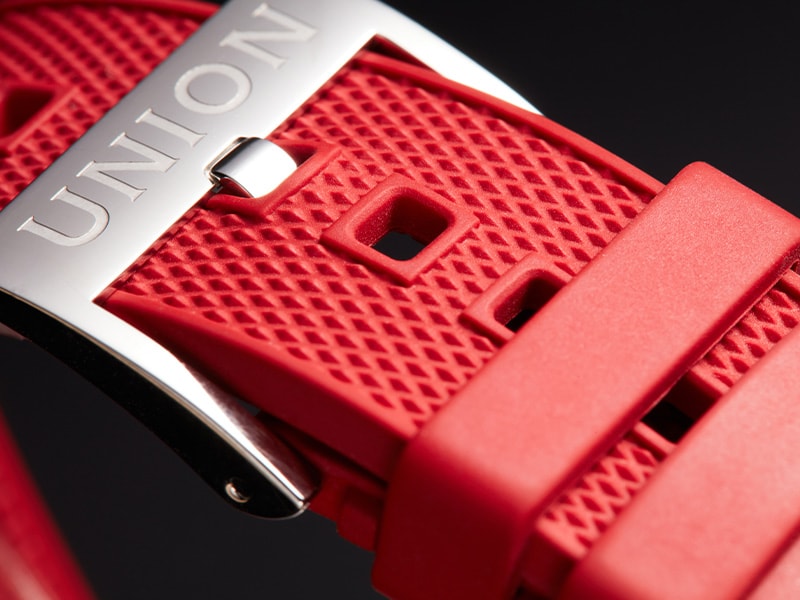
    Caoutchouc is the name given to elastic polymers that are mostly used to produce rubber. Union Glashütte uses caoutchouc for the straps and case sides of selected models. Caoutchouc is the ideal material for anyone with a sporty lifestyle – because rubber straps are elastic, kind to the skin, extremely durable and resistant to external influences such as water, light and chemicals.
    Diamonds

    Diamonds

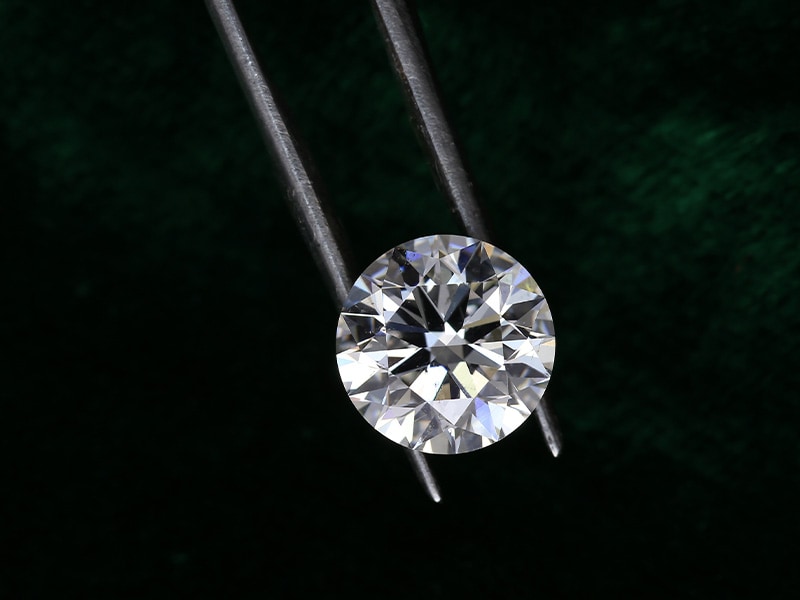
    It is not without reason that diamond is considered the king of the precious stones: it is the hardest natural substance in the world. Raw diamonds are burnished for use in the watchmaking and jewellery industries and are graded in terms of the four "C" criteria: Cut: The cut describes the individual shape of the diamond. The more elaborately and professionally the stone is faceted, the more intensively the light is reflected. Union Glashütte uses brilliant cut diamonds for cases and single cut diamonds for the dial. Colour: At first glance, you might think that all diamonds are white. However, experts differentiate between subtle grades of shading – Union Glashütte uses exclusively Top Wesselton diamonds. Clarity: They are largely invisible to the naked eye, but virtually all diamonds have minute imperfections that an expert with a magnifying glass can detect. Union Glashütte uses diamonds of the prized VSI (very small inclusions) class. Carat: Carat is the unit that indicates the weight of a diamond. One carat equates to 0.2 g. The diamonds used by Union Glashütte have different carat values depending on the model – these can be found in the technical data of the watch in question or in our e-catalogue. Union Glashütte uses solely diamonds that meet the requirements of the Kimberley process, an international certification system for raw diamonds. It is designed to halt the trade of smuggled diamonds – known as "blood diamonds" – that fund warfare.